Free Hydrate On Orders $99+ USE CODE: HYDRATE

Free Hydrate On Orders $99+ USE CODE: HYDRATE

How Much Electrolyte Powder Per Day? A Hard Worker's Dosing Guide
May 18, 2026 12 min read
The honest answer to "how much electrolyte powder per day" depends on what kind of work you're doing and how much you're sweating. A worker on a cool job site has very different needs from a roofer in July. One scoop a day is fine for some people. Three is appropriate for others. And there are limits worth knowing about either way.
This is a practical dosing guide for electrolyte powder — how much per day for hard workers, when to take it, how to adjust for heat and shift length, and what to watch for if you're using it long-term.
The short answer: 1 to 3 scoops per day for most hard workers
For a typical hard worker in moderate conditions, 1 to 3 scoops per day of a real electrolyte powder is the working range. Specifics:
- Cool conditions, light sweat: 1 scoop. Usually mid-shift or post-shift.
- Moderate heat, normal physical work: 2 scoops. One pre-shift or mid-morning, one mid-afternoon.
- Hot conditions or heavy physical work: 3 scoops. Pre-shift, lunch, and post-shift.
- Extreme heat or back-to-back long shifts: 3-4 scoops, sometimes more — but at this level you should also be tracking sweat loss and salt intake more deliberately.
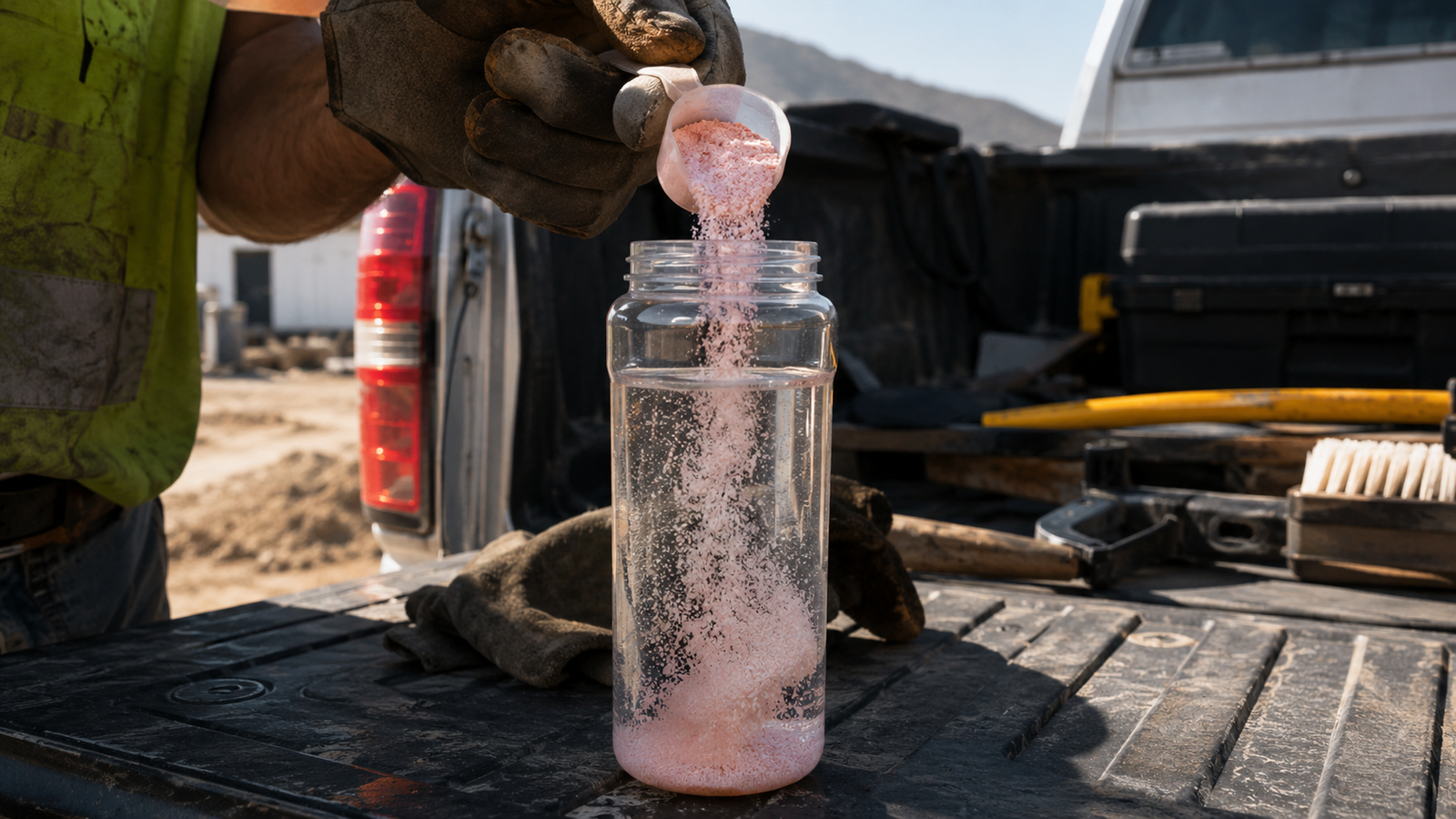
For Hydrate, one scoop delivers 500mg sodium, 340mg potassium, 40mg magnesium, 50mg calcium, plus 95mg Vitamin C and 1.7mg B6. That's a meaningful dose of sweat replacement per serving, so most workers don't need to stack scoops to hit useful electrolyte levels.
The rest of this guide explains how to dial in your number, when to take it, and how to know if you're going too high or too low.
How to figure out how much you actually need
The standard daily sodium recommendation for healthy adults is between 1,500mg (American Heart Association) and 2,300mg (FDA). Those numbers were written for people sitting in office chairs and not sweating much.
Hard workers in heat lose sodium fast. CDC and OSHA workplace heat research puts sweat sodium losses at roughly 1,000 to 2,000mg per hour during heavy physical work in hot conditions. That's the math behind why standard daily intake numbers don't apply to you — you can blow through the "daily total" in 90 minutes of roofing in July.
A practical way to dial in your dose:
Check the conditions. Heat index, sun exposure, work intensity, and shift length all matter. Hot + heavy + long = more electrolytes. Cool + light + short = less.
Watch for visible salt loss. White salt rings on your hat, shirt, or face after a shift mean you're a heavy salt sweater. That's a signal to increase intake, not decrease it.
Track how you feel. Cramps at night, brain fog by mid-afternoon, headaches from drinking water — these are signals you're not keeping up. If you're getting them, add a scoop and reassess in a week.
Check the urine color. Pale yellow = well hydrated. Dark yellow = behind on fluid. Clear all day = drinking too much plain water without enough electrolytes.
Talk to your doctor if it matters. If you have high blood pressure, kidney issues, heart conditions, or are on a sodium-restricted diet, your dose math is different. Always check with your doctor before increasing daily sodium intake — even from a clean electrolyte powder.
When to take electrolyte powder
Timing matters as much as total dose. The most effective electrolyte protocols spread intake throughout the day rather than slamming everything at once.
Standard daily protocol for hard workers:
| Time | Dose | Why |
|---|---|---|
| Pre-shift | 1 scoop in 16 oz water | Load up before sweat starts |
| Mid-morning to lunch | 1 scoop if hot/heavy | Replace what you've already lost |
| Mid-afternoon | Salty snack + water | Maintain through the back half |
| Post-shift | 1 scoop in 16 oz water | Set up for overnight recovery |
For 8-hour shifts in moderate conditions, two scoops (pre and post) is usually enough. For 10-12 hour shifts in heat, three scoops spaced through the day works better than two larger doses.
Can you take electrolytes before bed?
Yes. A scoop in water about 60-90 minutes before bed is fine for most people and can help workers who wake up cramping at 3 AM. The one thing to watch for: a full glass of fluid right before sleep usually means waking up at 2 AM for the bathroom. Drink it earlier in the wind-down window.
Can you take electrolytes on an empty stomach?
Yes, and many workers do. Electrolyte powder in water is well-tolerated on an empty stomach. The exception: if you're sensitive to fluctuating blood sugar or use intermittent fasting, the slight calorie content (10 calories in Hydrate per scoop) is small enough that most fasting protocols allow it.
Should you take electrolytes every day?
For most hard workers in physical jobs, yes — daily electrolyte support is more useful than occasional use. Your body doesn't store electrolytes in any meaningful way; it uses what's available and excretes what's extra. Daily consistent intake matches the daily consistent losses from physical work.
For people sitting in offices, eating normal salted food, and not sweating much, daily electrolyte powder is overkill. The body gets enough sodium from food in that scenario.
Can you take too many electrolytes? The real answer
Yes — but the threshold is higher than most people realize, and the symptoms show up before anything dangerous happens.
The biology: Healthy kidneys are efficient at filtering out excess sodium, potassium, magnesium, and calcium. For a healthy adult drinking water alongside their electrolyte powder, the body handles excess by simply excreting it through urine. That's why "too many electrolytes" usually doesn't become a real problem for healthy hard workers in normal use.
Where it becomes a problem:
- Existing kidney disease. Kidneys that can't filter properly can't excrete excess minerals. Sodium and potassium buildup can become serious. Always work with a doctor on dosing.
- High blood pressure. Sodium can raise blood pressure in salt-sensitive individuals. If you have hypertension, talk to your doctor before increasing daily sodium intake.
- Heart conditions. Some heart conditions are affected by electrolyte shifts. Doctor's input matters.
- Certain medications. Some blood pressure medications, diuretics, and others interact with electrolyte intake.
- Extreme over-dosing. Drinking 8+ scoops of electrolyte powder per day for an extended period can push intake outside normal handling for some people.
Warning signs you're taking too many electrolytes:
- Persistent stomach upset, nausea, or diarrhea
- Salty taste in your mouth that doesn't go away
- Increased thirst that water doesn't satisfy
- Headaches that come and go without other cause
- Swelling in hands, feet, or face
- Spike in blood pressure if you monitor it
If any of these show up consistently, reduce intake and talk to your doctor. The body usually self-corrects within a few days when intake drops to normal levels.
Is too much electrolyte powder bad for you?
For healthy adults in normal daily-use ranges (1-4 scoops per day), the research and clinical guidance say no — your body handles it through normal kidney function and excretion.
The category of "too much" depends heavily on what's in the product:
- Clean electrolyte powders (real minerals, no excess sugar, no megadoses of single nutrients) are the safest for daily use across hard work conditions.
- Sugar-loaded sports drinks taken at 4-6 servings per day cause more issues from the sugar load than from the electrolyte content.
- High-dose single-mineral supplements (mega-dose magnesium, megadose potassium) carry more risk than balanced electrolyte powders, because the body's tolerance for any single mineral in isolation is narrower.
Hydrate was formulated around dose levels that are meaningful for hard work but stay well within safe daily ranges even at 3-4 scoops per day. The full electrolyte balance (sodium, potassium, magnesium, calcium together) is part of what keeps the math reasonable across multiple servings.
What about specific minerals — daily limits
For reference, here's where the major electrolytes sit on standard daily intake guidance:
- Sodium: AHA 1,500mg / FDA 2,300mg per day for general population. Hard workers in heat can lose this in 1-2 hours.
- Potassium: Adequate intake roughly 2,600-3,400mg per day. Most Americans get less than this from food.
- Magnesium: RDA 310-420mg per day. Most Americans get less than this from food.
- Calcium: RDA 1,000-1,200mg per day. Mostly food-driven.
Hydrate per scoop covers roughly:
- 22% of FDA daily sodium (but workers losing sodium fast may need 2-3x daily values from intake)
- 10% of adequate potassium intake
- 10% of magnesium RDA
- 5% of calcium RDA
Two to three scoops per day across a hot shift puts you in a reasonable working range for active workers, well within standard tolerance for healthy adults.
How does electrolyte powder compare to other sources?
You can get electrolytes from a lot of places — food, salt, sports drinks, coconut water, plain water with salt added. Each has trade-offs.
| Source | Pros | Cons |
|---|---|---|
| Real food + salt | Cheapest, most natural | Inconsistent dosing, hard to hit hard-worker numbers from food alone |
| Pink Himalayan salt in water | Clean sodium source | Sodium only, no potassium/magnesium/calcium |
| Regular sports drinks | Easy, familiar | 34g sugar per bottle, low electrolyte doses, artificial dyes |
| Sugar-free sports drinks | Lower calorie | Artificial sweeteners, missing magnesium and calcium |
| Coconut water | Natural potassium | Low sodium, expensive, no magnesium dose |
| Electrolyte powders | Accurate dosing, full mineral profile, daily-use friendly | Cost varies, quality varies |
For workers stacking long physical shifts in heat, a complete electrolyte powder is usually the practical answer because the dosing is accurate, the mineral profile is full, and the daily cost works out lower than buying sports drinks at retail. For a deeper comparison of powders vs sports drinks, see the Hydrate vs Gatorade Zero breakdown. For more on the sodium source, see pink Himalayan salt and electrolytes.
Dosing for specific scenarios
Long shifts in heat (10-12 hours, heat index 90+): 3 scoops spread across the shift. Pre-shift, lunch, mid-afternoon. Add salty food at lunch. See the heat exhaustion guide for the full warning sign list.
Back-to-back long shifts (full week of overtime): 2-3 scoops per day, every day. Recovery between shifts matters more than peak dosing. Pair with post-shift muscle support like After Work Recovery to support muscle repair overnight. The recover faster after work guide covers the full overnight routine.
Long-haul driving in a hot cab: 2 scoops minimum. Pre-shift and mid-route. Dehydration in a closed cab is sneaky — you're sweating but not always feeling it. Watch for afternoon fog and headaches.
Indoor industrial work near heat (welding, foundry, kitchens): 2-3 scoops. The combination of heat and limited airflow drives heavy sweat loss even without direct sun. Easy to underestimate.
Cool weather, physical work: 1 scoop, usually post-shift. You still lose electrolytes through sweat in cooler conditions — just less. Don't drop below daily electrolyte support entirely if you're working hard.
Fasting or low-carb diets: Many fasting and low-carb protocols actually increase electrolyte needs because the body sheds water and minerals faster. 2 scoops per day during fasting windows is common.
General prevention/maintenance (no heavy work): 1 scoop per day or 1 scoop every other day. Mostly to keep electrolytes in the picture during a sedentary stretch.
For the broader recovery and hydration lineup built for hard workers, see the Recovery collection and Refuel for mid-shift energy plus electrolytes.
Frequently Asked Questions
How much electrolyte powder per day should I take?
For most hard workers, 1-3 scoops per day is the working range. Cool conditions and light work: 1 scoop. Moderate heat and normal physical work: 2 scoops. Hot conditions, heavy work, or long shifts: 3 scoops. Each scoop of Hydrate delivers 500mg sodium, 340mg potassium, 40mg magnesium, and 50mg calcium — a real per-serving dose, so most workers don't need to stack scoops.
Can you have too many electrolytes?
Yes, but the threshold is high for healthy adults. The body excretes excess electrolytes through urine. For people with kidney disease, high blood pressure, heart conditions, or who are on certain medications, the tolerance is lower — those individuals should work with a doctor on dosing. Warning signs of taking too many include persistent nausea, salty taste that won't go away, swelling, and unusual thirst.
Can you overdose on electrolytes?
True overdose on electrolytes is rare in healthy adults using normal-dose electrolyte powders. The body handles excess through normal kidney function. Risk increases with kidney disease, mega-dose single-mineral supplements, or extreme over-dosing (8+ scoops per day for extended periods). For most hard workers using 1-4 scoops per day of a balanced electrolyte powder, overdose is not a realistic concern.
Is too much electrolyte powder bad for you?
For healthy adults in normal daily-use ranges (1-4 scoops per day of a balanced powder), no — the body handles it through normal excretion. The issue is usually with sugar load (in sports drinks) or with mega-dose single-mineral supplements, not with balanced electrolyte powders. People with high blood pressure, kidney issues, or other medical conditions should talk to their doctor before increasing daily electrolyte intake.
Can you take electrolytes every day?
Yes. For most hard workers in physical jobs, daily electrolyte support is more useful than occasional use because daily sweat losses are consistent. Healthy adults can take a balanced electrolyte powder daily indefinitely. Workers in sedentary jobs without heavy sweat don't strictly need daily electrolyte powder — food sodium covers most of the need in that scenario.
Should you take electrolytes every day?
For hard workers, tradespeople, and anyone in physical jobs with significant sweating: yes. For office workers eating normal salted food and not exercising heavily: no, food covers it. The decision comes down to whether your daily sweat loss exceeds what your normal diet replaces.
When should you take electrolyte powder?
Pre-shift (to load up before sweating starts), mid-shift (to replace what you've lost), and post-shift (to set up overnight recovery). For hot conditions or long shifts, this means 2-3 doses spread across the day. For light conditions, one dose, usually post-shift, is enough.
Can you take electrolytes before bed?
Yes. A scoop in water 60-90 minutes before bed is fine for most people and can help workers who wake up cramping. Avoid drinking a full glass of fluid right before sleep — you'll wake up for the bathroom. Drink it during your wind-down window.
Can you take electrolytes on an empty stomach?
Yes. Electrolyte powder in water is well-tolerated on an empty stomach. The small calorie content (10 calories per scoop of Hydrate) is small enough that most intermittent fasting protocols allow it.
How many scoops of electrolyte powder per day is safe?
For healthy adults, 1-4 scoops per day of a balanced electrolyte powder is well within safe daily tolerance. Most hard workers fall in the 1-3 scoop range. Athletes and outdoor workers in extreme heat sometimes go higher. People with kidney, heart, or blood pressure issues should work with a doctor on the right number.
What happens if I take electrolytes every day?
Daily electrolyte intake supports normal fluid balance, muscle function, and hydration efficiency for people who sweat significantly. For hard workers, daily use typically reduces cramps, brain fog, headaches, and afternoon dead zones. For sedentary people, daily use is unnecessary but not harmful in normal doses.
How much sodium per day do I need as a worker?
Standard guidance is 1,500-2,300mg per day for the general population. Hard workers in heat can lose 1,000-2,000mg of sodium per hour through sweat — so actual sodium needs for hard workers can be substantially higher than general population numbers. Workers with visible salt rings on their clothes are clearly losing sodium fast and need to replace it. Workers with high blood pressure should talk to their doctor about the right number for them.
Can I drink too much electrolyte water?
Drinking large volumes of electrolyte water is generally well-tolerated, but excessive intake (a gallon+ per day of any fluid, including electrolyte water) carries risks like overhydration and dilution if pushed to extremes. For normal use — sipping electrolyte water through a shift instead of slamming gallons — there's no realistic risk.
How many electrolyte drinks per day is too many?
For balanced electrolyte powders, 3-4 servings per day is the upper end of normal use. For sugar-loaded sports drinks, fewer (1-2 per day) because of the sugar load. The "too many" line depends more on the product's other ingredients (sugar, artificial sweeteners) than on the electrolyte content itself.
Can you have too much magnesium from electrolyte powder?
Possible at very high doses, but unlikely with normal electrolyte powder use. Hydrate contains 40mg magnesium per scoop. Four scoops per day = 160mg, well below the 350mg/day upper limit for supplemental magnesium set by the Institute of Medicine. Magnesium overdose symptoms include diarrhea, nausea, and stomach cramping.
Should I take electrolytes on rest days?
For hard workers in physical jobs, daily electrolyte support — including rest days — works better than skipping rest days. Your body uses the rest day to recover, and electrolyte balance is part of that recovery. A single scoop on a rest day is usually enough.
Can I take electrolytes if I have high blood pressure?
Talk to your doctor first. Sodium can raise blood pressure in salt-sensitive individuals. Some hypertensive workers do fine with electrolyte powder; others need to monitor closely or use a lower-sodium product. Don't make this call without your doctor's input.
Can I take electrolytes if I have kidney problems?
Talk to your doctor first. Kidneys filter excess electrolytes, and impaired kidney function changes the math significantly. Some kidney conditions limit potassium intake; others limit sodium. Always work with a doctor on dosing if you have kidney disease.
Are BCN supplements safe for daily long-term use?
Yes. All Blue Collar Nutrition products, including Hydrate, are hormone-free, contain no banned substances or amphetamines, and are third-party tested in an FDA-registered facility in the USA. Hydrate is formulated for daily use across long physical shifts. As with any new supplement, talk to your doctor if you have heart, kidney, blood pressure, or other chronic conditions.